Danggishio Meaning: What Does 당기시오 Mean on Korean Doors?
Danggishio meaning is simple and immediately useful: the sign 당기시오 means “pull.” If you see this word on a door in Korea, grab the handle and pull it toward you. That is all you need to know to get through the door. This short guide explains where you will see it, how to say it, and how to avoid the most common mistake visitors make.
Quick Answer
당기시오 (danggishio) means “Pull” in Korean. It appears on doors that open toward you. When you see this sign, pull the door handle toward your body. The opposite sign is 미세요 (miseyo), which means “Push.”
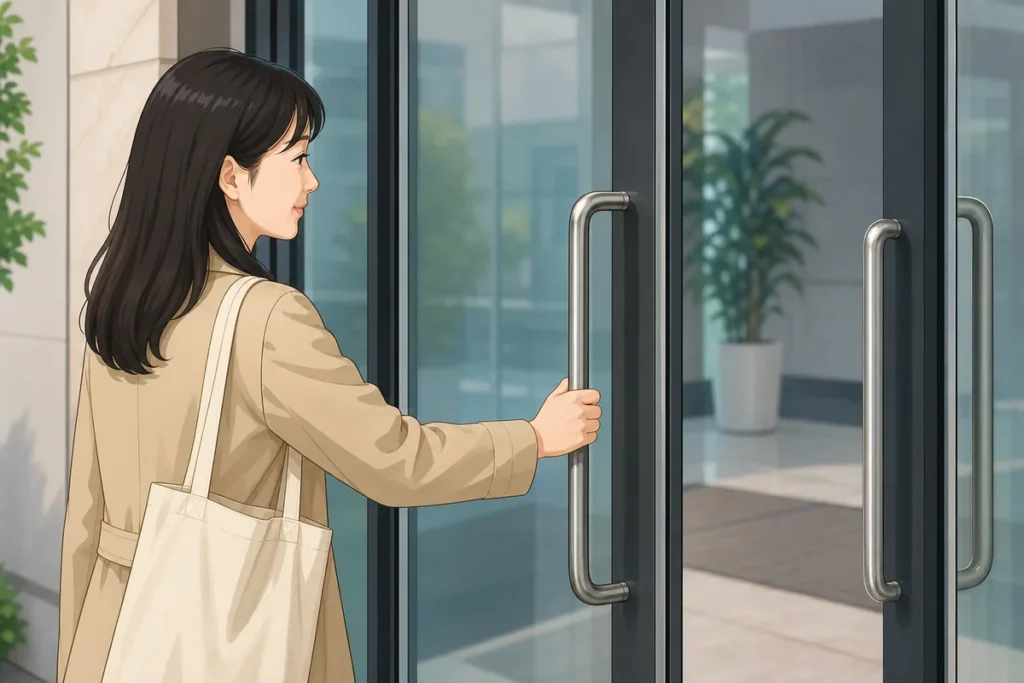
Table of Contents
- What Does 당기시오 Mean?
- Where Will You See This Sign?
- What Foreigners Often Get Wrong
- Useful Korean Phrases for Doors and Signs
- Warnings and Things to Check
- Frequently Asked Questions
- Summary
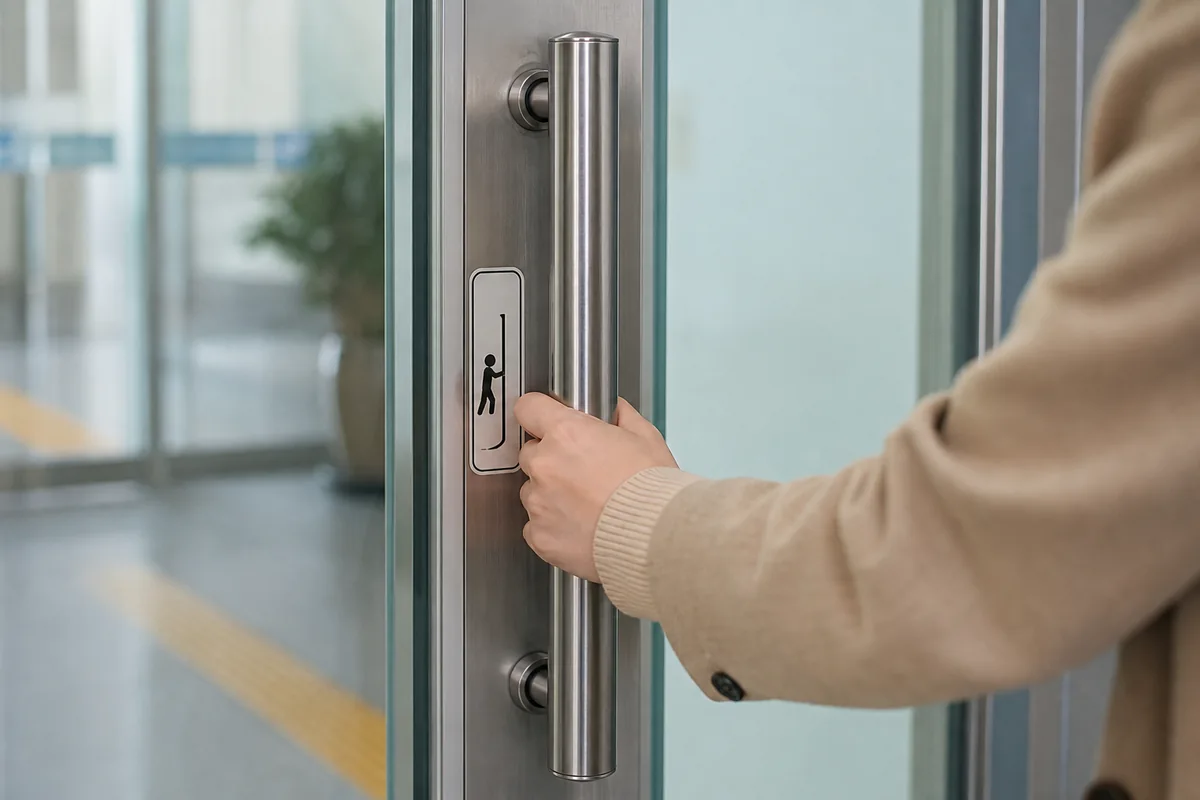
What Does danggishio meaning Mean? A Simple Explanation of Danggishio
The word 당기시오 comes from the Korean verb 당기다, which means “to pull.” The ending -시오 is a polite instruction form, similar to saying “please pull” in English. You do not need to understand Korean grammar to use this sign. You just need to recognize the word and pull.
Koreans also write the same instruction as 당기세요 on some signs. Both mean exactly the same thing. If you see either version, the action is the same: pull the door toward you.
Pronunciation is roughly “dang-gi-shi-oh.” Say it in four short syllables with equal stress. But honestly, you do not need to say it out loud. You just need to read it and act.
Where Will You See This Sign?
You will encounter 당기시오 in many everyday places across Korea. Here are the most common locations:
- Subway station entrances and exits — glass doors near ticket gates often have this sign
- Convenience stores — GS25, CU, 7-Eleven, and others use it on entrance doors
- Coffee shops and restaurants — especially places with heavy glass or wooden doors
- Government offices and hospitals — official buildings frequently label all doors clearly
- Shopping malls and department stores — side entrances and stairwell doors
- Office buildings — lobby and floor-level doors
- Schools and universities — classroom and building entrance doors
Basically, any door in Korea that opens toward you is likely to carry this sign, especially in public buildings where many people pass through every day.
What Foreigners Often Get Wrong
The single biggest mistake visitors make is pushing a door that says 당기시오. This happens because many people are used to pushing doors open in their home countries, or because they do not yet recognize the Korean characters.
The confusion gets worse when a door has no English translation next to the Korean sign. Many doors in smaller shops, older buildings, and local neighborhoods only show the Korean text. If you push and the door does not move, look for 당기시오 near the handle and try pulling instead.
Another common mix-up is confusing 당기시오 with 미세요. They look different in Korean, but if you are new to the script, both might just look like “Korean writing.” The section below will help you tell them apart at a glance.
Useful Korean Phrases for Doors and Signs
Pull, Push, and Related Door Signs in Korea
⚠️ Warnings and Things to Check
- Automatic doors look different. Many modern buildings in Korea have automatic sliding doors. These have no sign because you do not need to push or pull. If the door does not move at all, check whether it is automatic and step closer to trigger the sensor.
- Some doors have both signs. A door may show 당기시오 on one side and 미세요 on the other side. This is normal. The sign you see tells you what to do from where you are standing.
- Emergency exit doors. Fire exit doors in Korea are usually push-to-open from the inside for safety reasons. These may not carry the usual signs. Follow the exit arrows and push in an emergency.
- Signs can be small or faded. In older buildings, the sign may be worn or placed low on the door. If you are unsure, look at the hinge side of the door. If the hinges are on your side, you push. If the hinges are on the far side, you pull.
- Information on signs can change. Building renovations and updates sometimes change door directions. Always check the current sign on the door you are using.
Frequently Asked Questions
What does danggishio mean in English?
Danggishio (당기시오) means “pull” in English. It is a polite instruction telling you to pull the door open toward yourself.
Is 당기시오 the same as 당기세요?
Yes, they mean the same thing. Both are polite ways to say “pull” in Korean. You may see either version depending on the building or the age of the sign.
What is the opposite of 당기시오?
The opposite is 미세요 (miseyo), which means “push.” If you see 미세요, press the door away from you instead of pulling it.
How do I say 당기시오 in English pronunciation?
Say it as “dang-gi-shi-oh” — four syllables, spoken evenly. The “gi” sounds like the “gi” in “gift,” and the “oh” at the end is a short, clear vowel sound.
Why do some Korean doors have no English translation?
Many local shops, older buildings, and non-tourist areas only use Korean on their signs. This is completely normal. Learning to recognize 당기시오 and 미세요 visually will help you everywhere in Korea, even where no English is provided.
Where can a visitor learn more about reading basic Korean signs?
The National Institute of Korean Language (국립국어원) offers official resources on Korean language and signage. For practical travel use, looking up the Korean alphabet (Hangul) basics takes most people only a few hours and makes reading signs much easier.
Summary
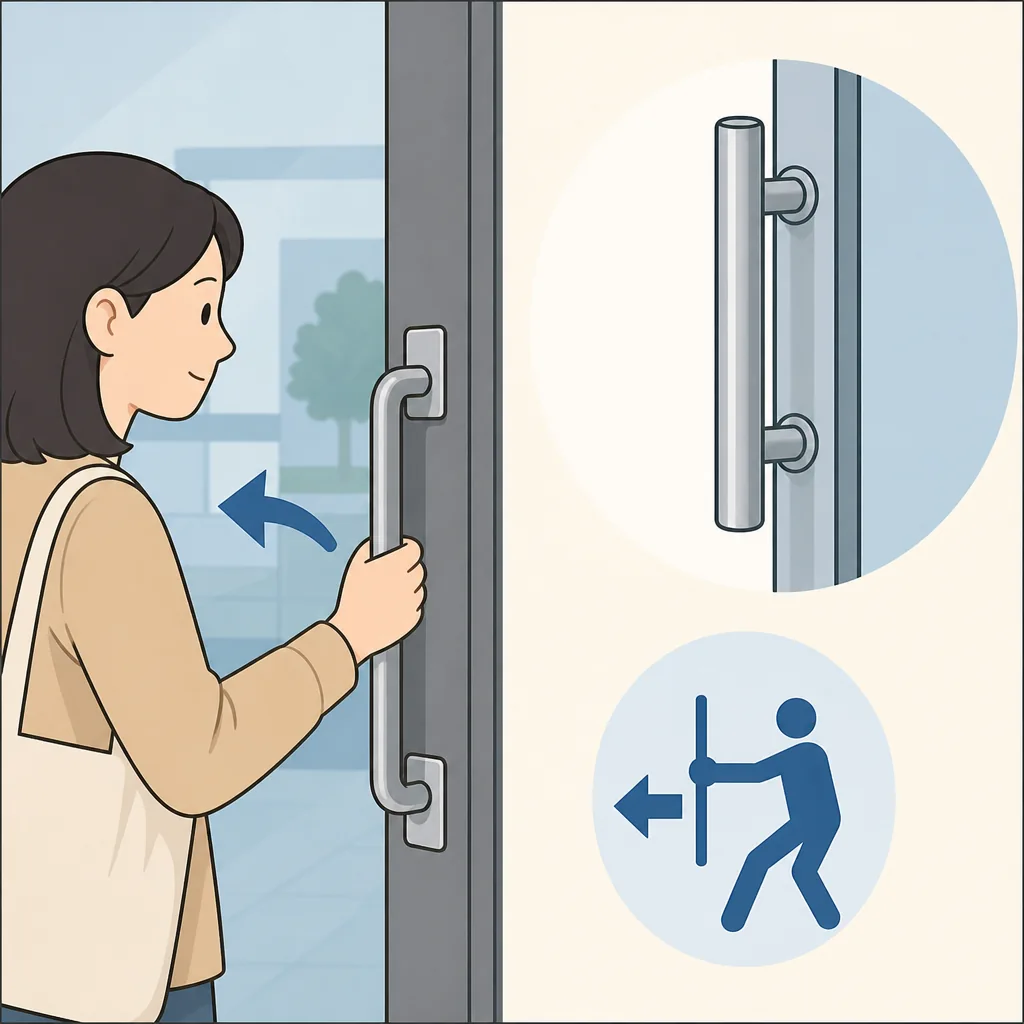
Danggishio meaning is straightforward: 당기시오 means “pull.” When you see this sign on a door in Korea, pull the handle toward you. The opposite sign, 미세요, means “push.” You will see 당기시오 on doors in subway stations, shops, restaurants, hospitals, offices, and many other public places throughout Korea. You do not need to speak Korean or study grammar to use this sign — you just need to recognize it and act. Save this page or take a screenshot of the phrase cards above before your next trip, and navigating Korean doors will never be a problem again.