Quick Answer
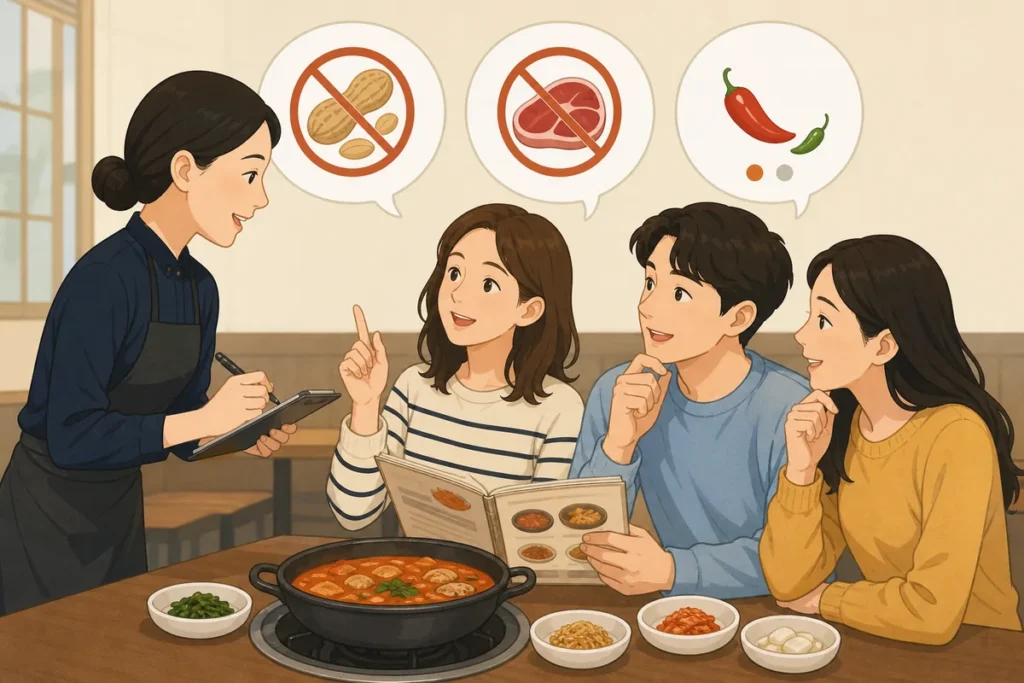
If you need to communicate food restrictions phrases in a Korean restaurant, start with these three: “알레르기 있어요” (I have an allergy), “덜 맵게 해주세요” (please make it less spicy), and “고기 빼주세요” (please leave out the meat). These cover the most common situations at casual restaurants and local eateries without needing long explanations.
Quick Action Checklist
- Say your allergy ingredient clearly before ordering, not after the food arrives.
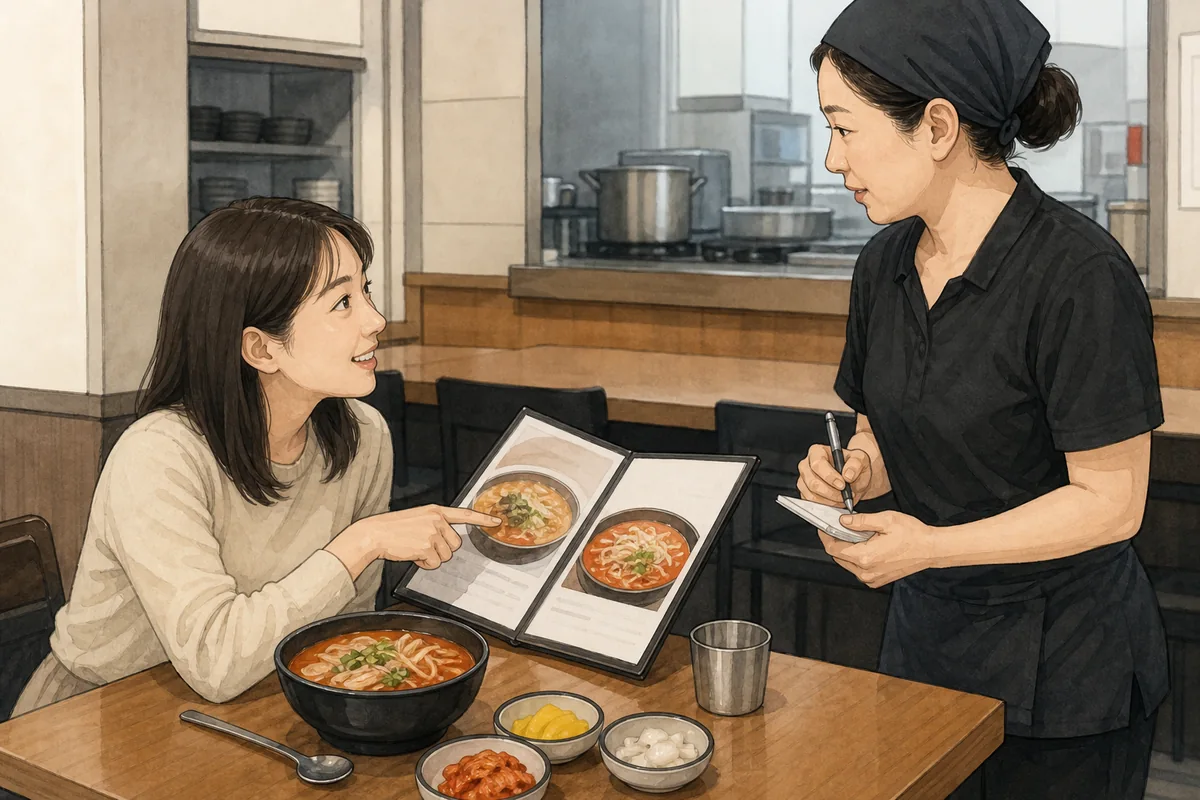
- Point to the dish on the menu and say “이거” (this one) before adding your request.
- Use “덜 맵게 해주세요” for less spicy, or “안 맵게 해주세요” for not spicy at all.
- Name the specific ingredient you want removed — for example, “돼지고기 빼주세요” for no pork.
- If you have a serious allergy, ask “이 음식에 __ 들어가요?” to check if the ingredient is in the dish.
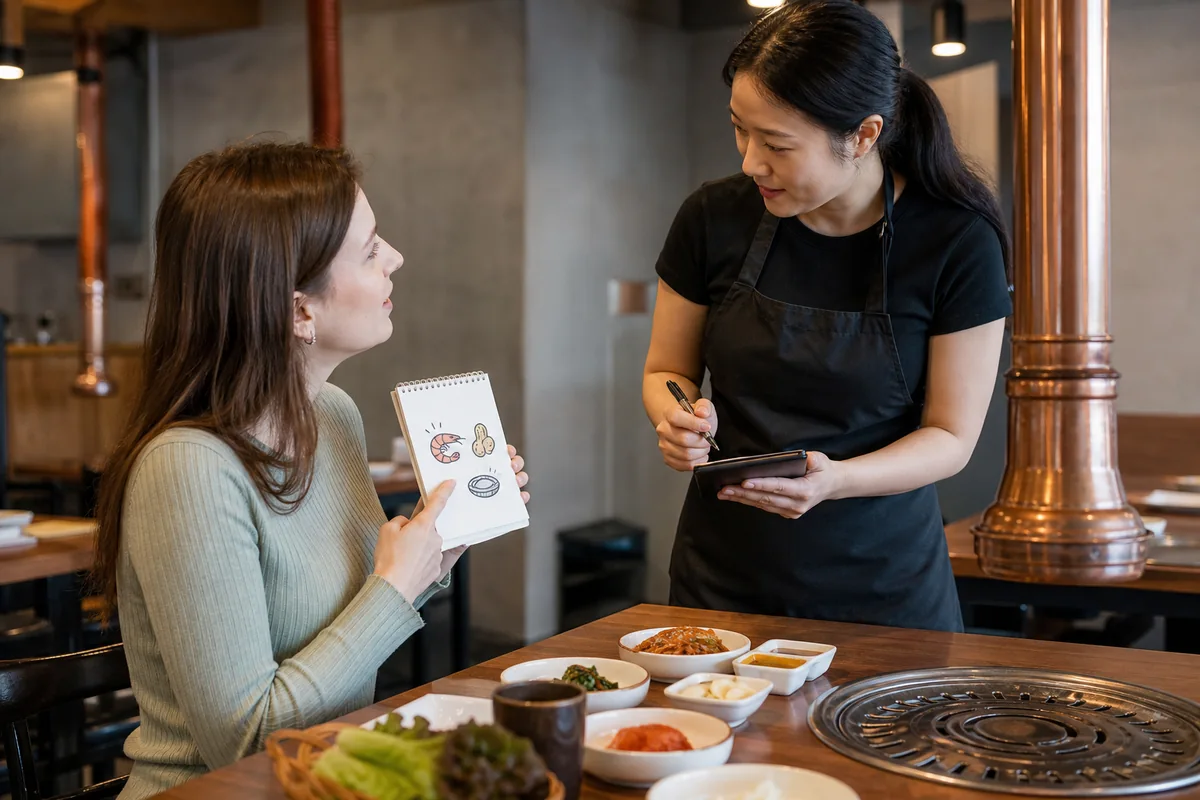
- For very serious allergies, consider carrying a written allergy card in Korean.
- Confirm with staff that changes are possible — not every dish can be modified.
Common Phrases You Can Say Right Away
These are the core food restrictions phrases you need before anything else. You do not need perfect Korean pronunciation — saying these clearly and slowly is enough for most restaurant staff to understand.
How to Say You Have an Allergy with food restrictions phrases
The phrase “알레르기 있어요” is widely understood. To be more specific, add the ingredient name before it. Staff may not always be able to guarantee allergen-free preparation, especially in busy kitchens, so it helps to be as clear as possible about what you cannot eat.
Allergy Phrases by Ingredient
How to Ask for Less Spice
Korean food can be significantly spicier than expected, especially dishes with gochujang (고추장), gochugaru (고춧가루 — red chili flakes), or chili oil. There are two useful phrases depending on how much heat you can handle.
Spice Level Phrases
Note that some dishes are cooked with spice built into the base sauce, so “not spicy” may not always be possible. If the server says “못 해요” (can’t do it) or shakes their head, the dish may not be adjustable — it is reasonable to choose a different dish in that case.
How to Ask for No Meat or Ingredient Changes
Many Korean dishes include pork, beef, or seafood as a base ingredient, sometimes in the broth rather than as a visible piece. Naming the specific meat you want removed gives the kitchen clearer instructions than just saying “no meat.”
Ingredient Removal Phrases

Useful Phrase Variations for Restaurants
These extra phrases help you handle the full ordering conversation, from getting attention to confirming your request was understood.
What to Do If the Staff Asks Follow-Up Questions
After you mention an allergy or restriction, the server may ask a follow-up question. Here are the most common ones you might hear, and how to respond.
Common Server Questions and Your Replies
Important: If Your Allergy Is Severe
Korean restaurant kitchens often prepare multiple dishes in the same space, and shared equipment or sauces may contain allergens even when an ingredient is not listed in the dish. Telling a server about your allergy is a helpful first step, but it does not guarantee a completely allergen-free meal. If your allergy is severe or life-threatening, consider the following practical steps:
- Carry a written allergy card in Korean. A card that clearly states your allergy in Korean text is much easier for kitchen staff to read and pass along. You can prepare one before your trip.
- Choose restaurants carefully. International restaurants, allergy-friendly cafes, and some larger chain restaurants may have clearer ingredient information available.
- Ask specifically about the broth. Many Korean soups and stews use anchovy, pork bone, or shellfish-based broths that are not always visible in the dish.
- When in doubt, choose a different dish rather than relying on a modification that cannot be confirmed.
- For official food labeling and allergen information in Korea, the Ministry of Food and Drug Safety (식품의약품안전처) publishes guidance — you can search for their official website directly.
This guide provides communication phrases only. It does not provide medical advice, and readers with serious food allergies should consult their own medical professionals before traveling.
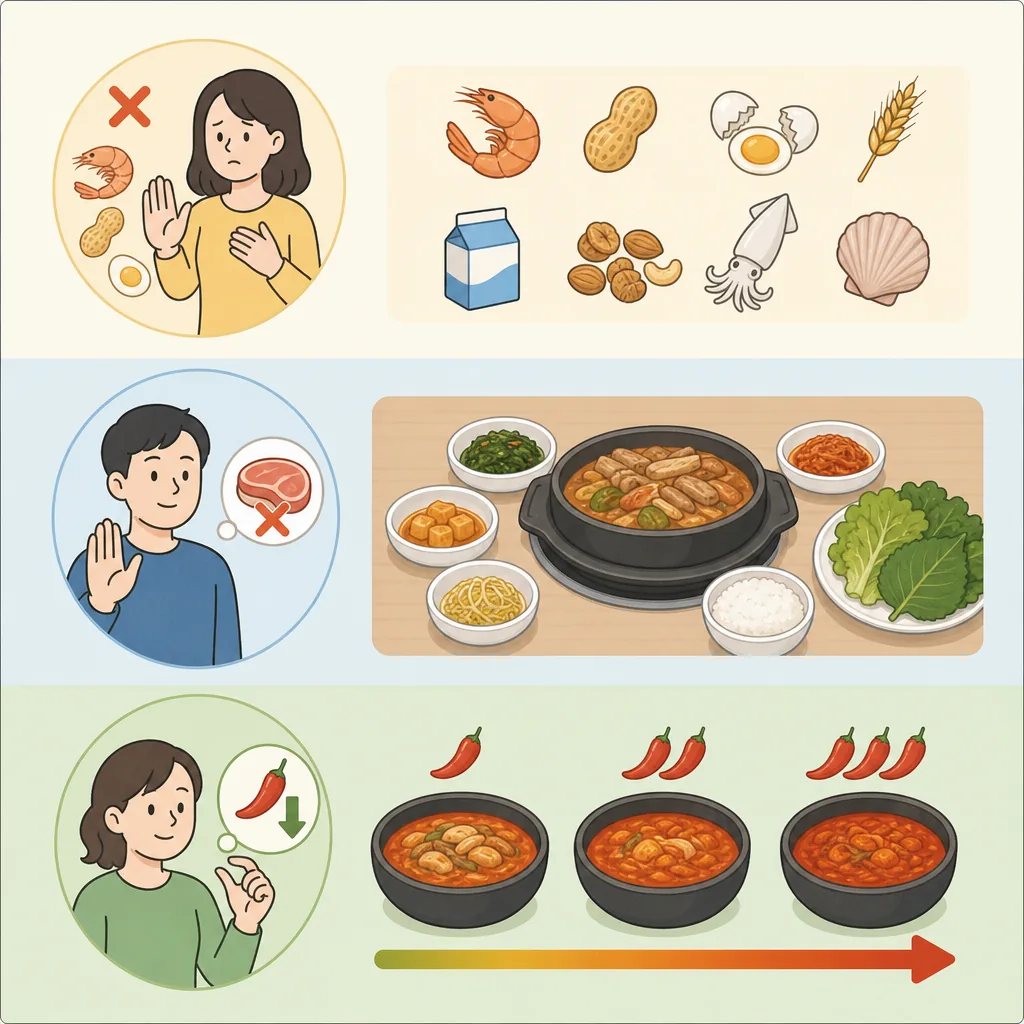
Quick Phrase Cheat Sheet
Save or screenshot this summary of the most important food restrictions phrases before you go out to eat.
Summary
The safest starting point is simple: say “알레르기 있어요” for allergies, “덜 맵게 해주세요” for less spice, and “고기 빼주세요” for no meat. Be specific, confirm ingredients when needed, and remember that serious allergies still require extra caution.
Sources & Verification
- National Institute of Korean Language — www.korean.go.kr
Last checked: July 30, 2026