Trash in Korea for Tourists: How to Separate General Waste, Recycling, and Food Waste
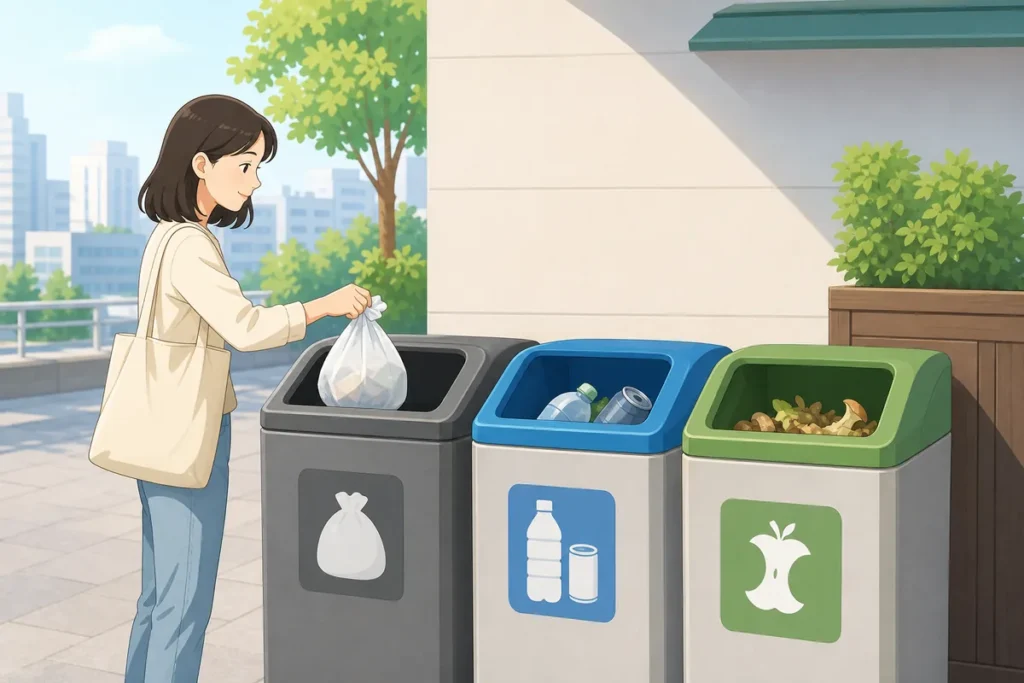
Trash in Korea can feel confusing at first, especially if you are used to throwing everything into one bin. The basic system is simple once you know the three main categories and a few common signs.
Trash In Korea: What You Need to Know
- Introduction
- The Three Types of Trash
- General Waste: What Goes In and How It Works
- Recycling: What to Separate and How to Prepare It
- Food Waste: What Counts and What Does Not
- Quick Decision Flow
- Common Situations for Tourists
- What Foreigners Often Get Wrong
- Useful Korean Phrases and Bin Labels
- Warnings and Things to Check
- FAQ
- Summary
Introduction
Trash in Korea works differently from many other countries, and it can feel confusing at first. Korea uses a strict separation system that most locals follow every day. As a tourist, you may not need to deal with it much if you stay in hotels. But if you stay in a guesthouse, Airbnb, or apartment, or if you visit a convenience store or a park, you will likely face a trash bin and wonder what goes where.
This guide explains the system in simple steps. You do not need to memorize every rule. You just need to understand the three main categories, recognize a few signs, and know what to do in the most common tourist situations. The rules can vary slightly by city or building, so always check local signs or ask staff when you are unsure.
The Three Types of Trash
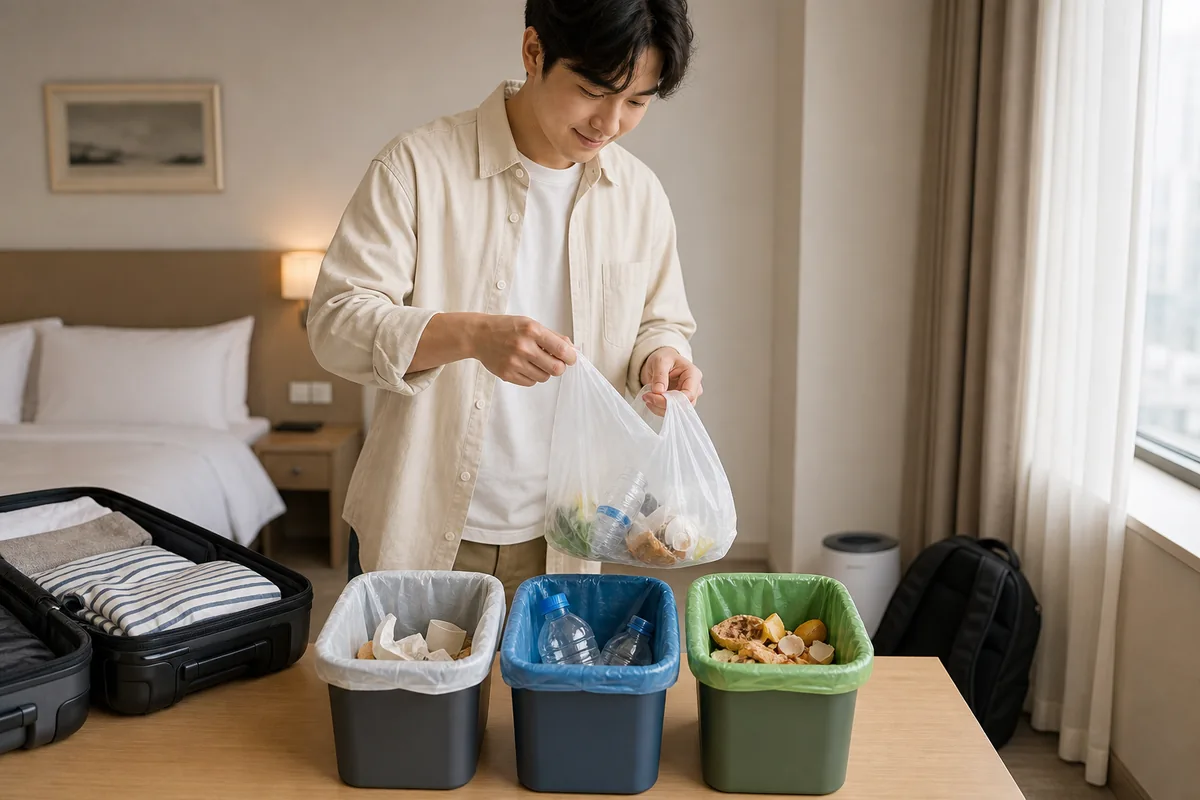
Korea divides waste into three main groups. Understanding these three groups is the foundation of everything else.
- General waste (일반쓰레기, ilban sseulle-gi): Mixed or dirty items that cannot be recycled or composted. This includes snack wrappers, used napkins, dirty paper cups, broken plastic, and most packaging with food residue.
- Recycling (재활용, jaehwal-yong): Clean bottles, cans, cardboard, paper, and plastics. These are usually sorted further into sub-categories like plastic, glass, metal, and paper.
- Food waste (음식물 쓰레기, eumsigmul sseulle-gi): Leftover food, vegetable peels, fruit skins, rice, noodles, and similar organic scraps. This is collected separately and processed into compost or animal feed.
General Waste: What Goes In and How It Works
General waste in Korea requires a special designated bag called a 종량제 봉투 (jongnyangje bongtu). This is a government-issued bag that you buy at a convenience store or supermarket. The bag is how the city charges residents for waste disposal. You cannot just use any plastic bag for general waste at a building trash station.
However, as a tourist staying in a hotel, you do not need to buy these bags. Hotel staff handle trash disposal for you. If you stay somewhere with a shared trash area, ask your host which bag to use or whether they provide one.
Common items that go in general waste:
- Snack wrappers and chip bags
- Used paper napkins and tissues
- Dirty paper cups with liquid residue
- Broken or mixed-material packaging
- Styrofoam with food stains
- Plastic bags that are too dirty to rinse
- Toothpicks, cotton swabs, and hygiene items
Recycling: What to Separate and How to Prepare It
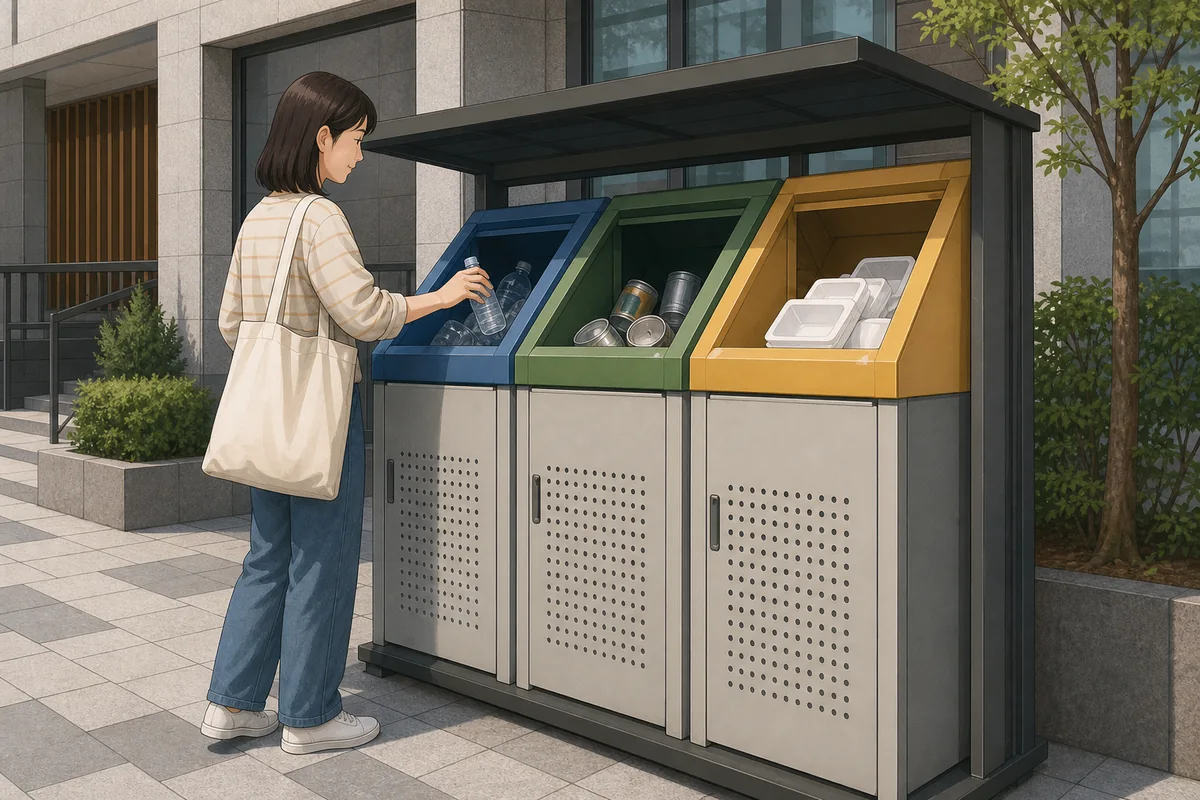
Korea’s recycling system works well, but only if items are clean. A plastic bottle with leftover liquid or a can with food inside is not accepted as recycling. Rinse bottles and cans before placing them in the recycling bin.
Most recycling areas have separate sections or bins for:
- Paper (종이, jong-i): Newspapers, cardboard, clean paper bags. Flatten cardboard boxes.
- Plastic (플라스틱, peullaseutik): Bottles, containers, and packaging marked with a recycling symbol. Remove labels if possible, rinse, and crush.
- Glass (유리, yuri): Glass bottles and jars. Rinse them first.
- Metal / Cans (캔, kaen): Aluminum and steel cans. Rinse and crush if possible.
- Styrofoam (스티로폼, seutiropon): Clean white styrofoam only. Food-stained styrofoam goes in general waste.
At convenience stores, you will often see a small recycling area near the entrance or outside. Use it for your empty bottles and cans after drinking.
If a bottle, cup, or container still has food, sauce, or liquid inside, rinse it first if possible. If it is too dirty to clean, it usually belongs in general waste.
Food Waste: What Counts and What Does Not
Food waste in Korea is taken very seriously. It is collected separately and turned into compost or animal feed. This means only actual food scraps belong in the food waste bin.
Items that go in food waste:
- Leftover rice, noodles, and soup
- Vegetable and fruit peels
- Bread crusts and cooked food scraps
- Coffee grounds and tea leaves (without the bag)
Items that do not go in food waste:
- Bones and shells (chicken bones, crab shells, clam shells)
- Fruit pits and large seeds (peach pits, avocado seeds)
- Onion skins and garlic skins
- Egg shells
- Paper napkins or food packaging
These non-food items go in general waste, even if they came from food. A useful rule: if an animal cannot eat it easily, it probably does not belong in food waste.
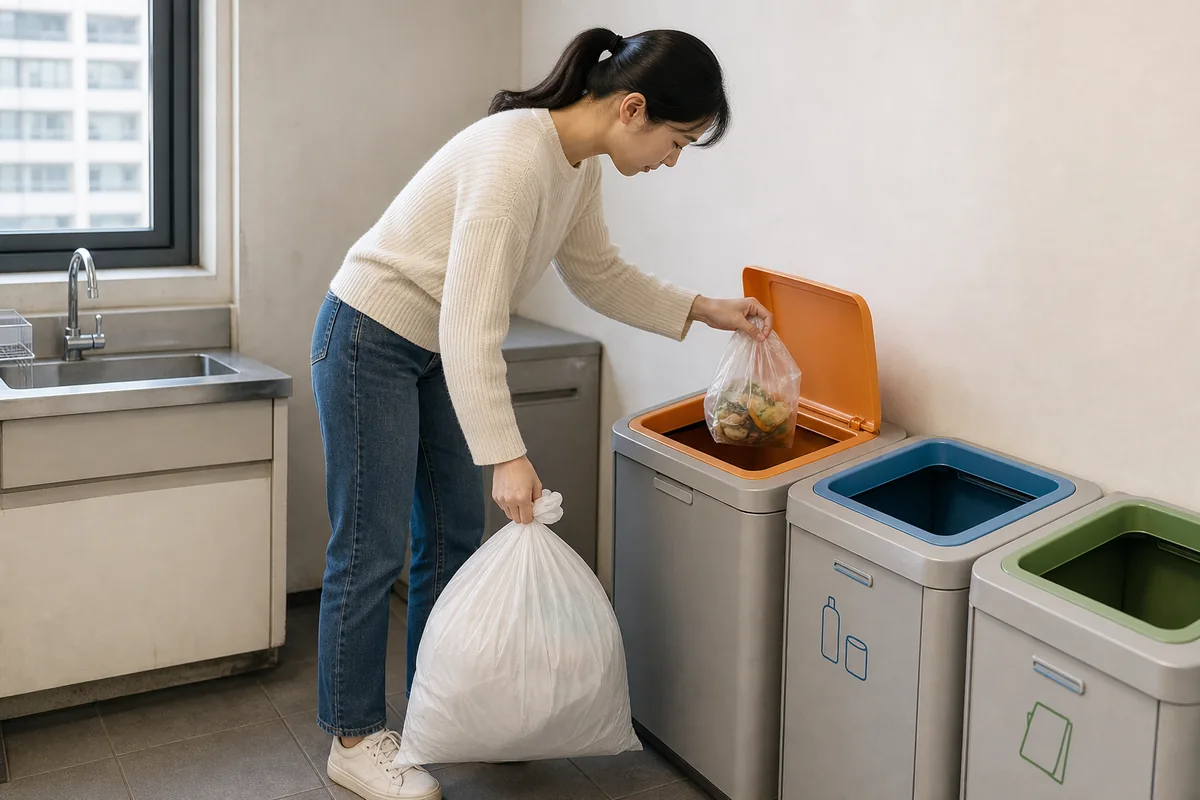
Food waste bins at apartment buildings often use a special paid bag or a card-based system. As a tourist, your host or hotel will usually handle this. If you are at a guesthouse, ask your host before throwing food scraps anywhere.
Quick Decision Flow
Use this simple flow when you are not sure where something goes:
- Step 1: Is it food or a food scrap? → Go to Step 2. If not, go to Step 3.
- Step 2: Is it a bone, shell, pit, or skin that animals cannot eat? → General waste. Otherwise → Food waste bin.
- Step 3: Is it a clean bottle, can, paper, or plastic with a recycling symbol? → Rinse it and put it in recycling. If it is dirty or mixed material → General waste.
- Step 4: Still unsure? → General waste is the safest option. Ask a staff member if possible.
Common Situations for Tourists
At a Hotel
Hotels manage trash for guests. Leave your trash in the room bin or in the hallway bin if provided. You do not need to separate anything. Housekeeping handles sorting. If you have a large amount of recyclables, you can ask the front desk where to place them.
At a Guesthouse or Airbnb
This is where tourists most often need to sort trash. Your host should explain the rules when you check in. If they do not, ask. Look for a trash station in the building or nearby. It usually has labeled bins or color-coded containers. Use the host’s guidance over any general advice, because building rules vary.
At a Convenience Store
Convenience stores in Korea have small recycling stations, usually near the entrance or outside the door. After eating or drinking, rinse your bottle or cup if there is a rinse station, then place it in the correct bin. Trash from food you eat inside the store can often go in the store’s bins. Check the labels before tossing anything.
In a Public Park or Street
Public trash bins in Korea are less common than in many other countries. Many streets have no bins at all. Koreans often carry their trash until they find a bin. If you see a bin, it is usually for general waste only. Do not put food scraps in a street bin unless it is labeled for food waste. Carry a small bag for your trash if you plan to be outside for a while.
At a Building Trash Station
Apartment buildings and some guesthouses have a shared trash station, often in the basement or outside the building. These stations have clearly labeled sections. Look for signs in Korean and sometimes in English or pictures. Match your trash to the correct section. If you are unsure, ask a neighbor or your host rather than guessing.
What Foreigners Often Get Wrong
- Putting food waste in general waste: This is one of the most common mistakes. Even a small amount of leftover rice or fruit peel should go in the food waste bin, not the general bin.
- Putting dirty recyclables in recycling: A bottle with liquid inside or a container with sauce residue is not recycling. Rinse it first.
- Using any plastic bag for general waste: At building trash stations, only the official paid bag is accepted. Using a regular shopping bag can result in the trash being rejected.
- Throwing bones or shells in food waste: Chicken bones, fish bones, and shellfish shells go in general waste, not food waste.
- Leaving trash on the street or near a bin: If the bin is full or you are unsure, carry your trash with you. Leaving it on the ground is considered littering and can result in a fine.
- Assuming all cities have the same rules: Seoul, Busan, Jeju, and smaller cities can have slightly different systems. Always check local signs.
Useful Korean Phrases and Bin Labels
Bin Labels You Will See
Helpful Phrases to Ask Staff or Your Host
Warnings and Things to Check
- Batteries: Used batteries must go in special battery collection boxes. These are often found at convenience stores, pharmacies, and building lobbies. Never put them in general waste or recycling.
- Broken glass: Wrap broken glass carefully in newspaper or thick paper and label it clearly before placing it in general waste. Do not put it loosely in a bin where someone could be cut.
- Light bulbs and fluorescent tubes: These contain hazardous materials. Take them to a designated collection point. Ask your host or the building manager where to bring them.
- Electronics and appliances: Old phones, chargers, and small electronics should not go in any regular bin. Look for e-waste collection boxes at electronics stores or ask your accommodation for guidance.
- Medicines and chemicals: Do not flush or bin unused medication. Pharmacies in Korea accept unused medicines for safe disposal.
- Large items and furniture: These require a separate sticker or fee to dispose of. As a tourist, this is unlikely to apply to you, but do not leave large items near a trash station without checking first.
Rules and collection points can change. Confirm current procedures with your accommodation or local authorities if you are unsure.
Improper disposal of trash in Korea can result in fines. Using the wrong bag, leaving trash outside designated hours, or littering in public spaces are all taken seriously. Rules about disposal times and locations vary by neighborhood and building. Always check with your host or look for posted signs at the trash station. When in doubt, ask rather than guess.
FAQ
Does a visitor need to sort trash at a visitor’s hotel in Korea?
Usually no. Hotels normally handle sorting and disposal for guests. If the hotel asks you to separate items, follow the posted instructions or ask the front desk.
Can a visitor use any bag for general waste?
Usually not at building trash stations. General waste often requires an official paid bag. Hotels are different because staff usually handle the trash for you.
What should a visitor do if a visitor am not sure where something goes?
Use the safest option and ask a staff member or host if possible. If it is a dirty mixed item, it usually goes in general waste. If it is clean and clearly recyclable, place it in recycling.
Are public trash bins common in Korea?
No, not always. Many streets have very few bins, so people often carry their trash until they find a proper disposal point.
Trash in Korea is easiest to handle when you remember three groups: general waste, recycling, and food waste. Clean bottles, cans, paper, and plastic usually go to recycling. Leftover food goes to food waste. Mixed or dirty items usually go to general waste. Rules can vary by building and city, so check signs and ask staff when needed.