Quick Answer
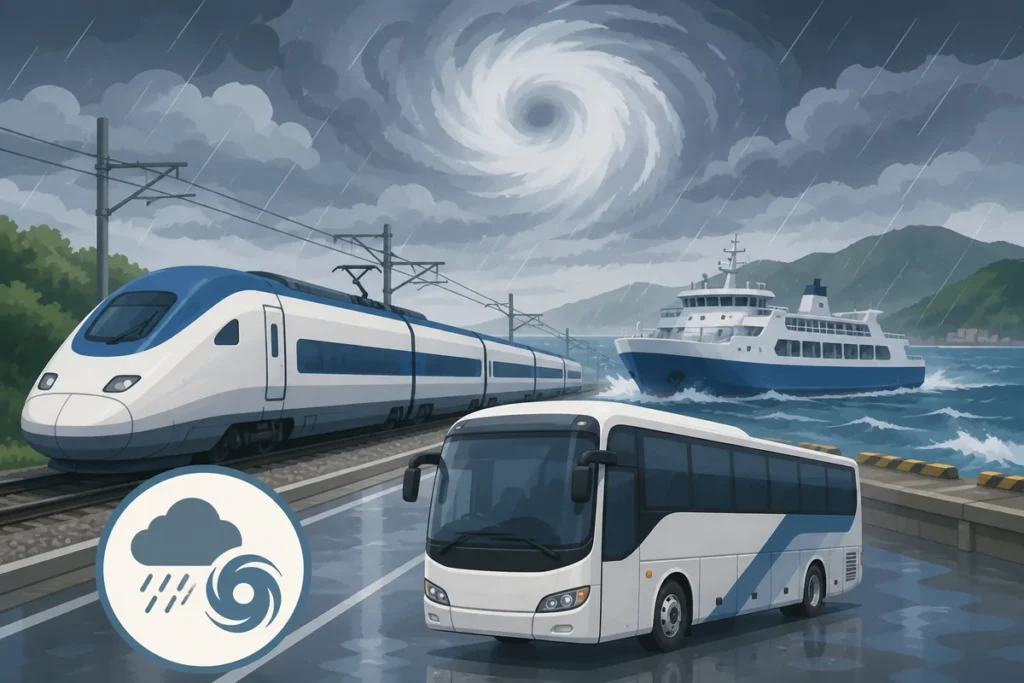
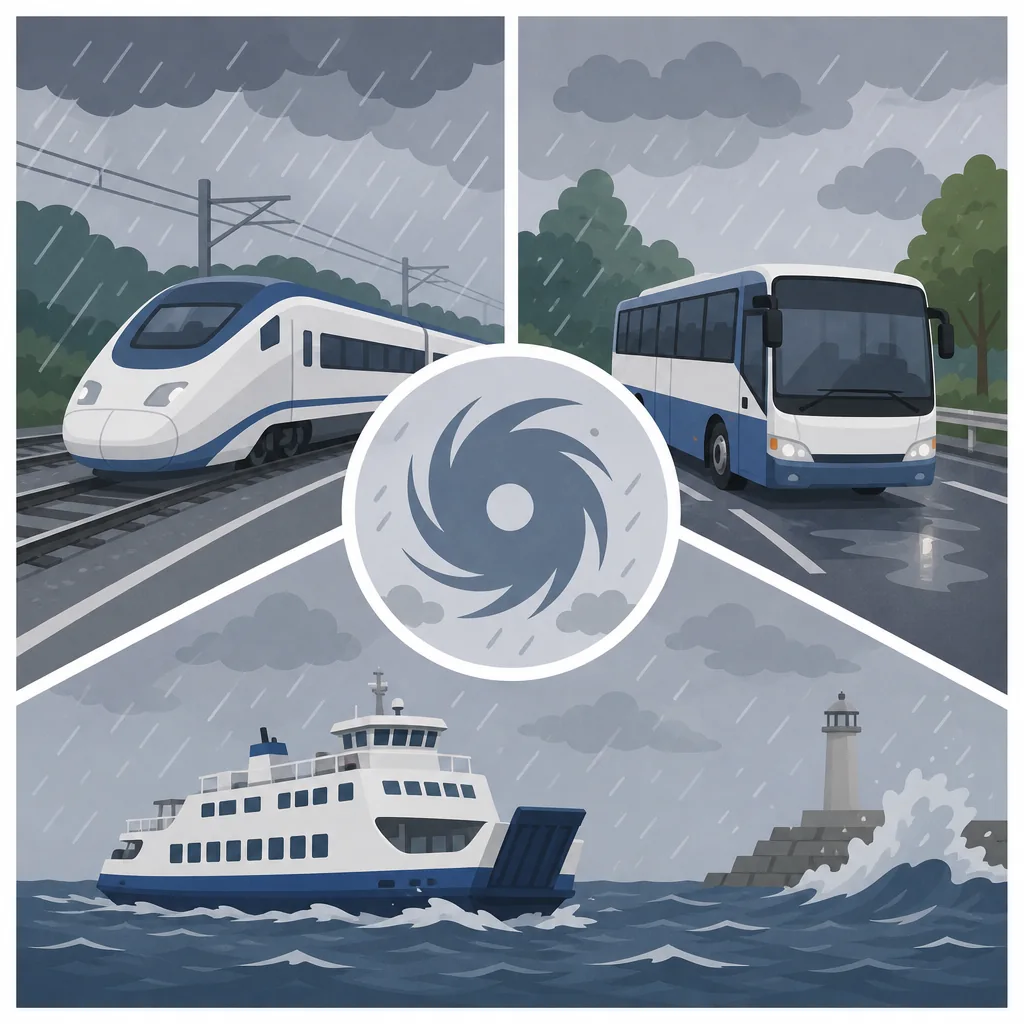
KTX buses ferries typhoon service can still run, but delays, reduced frequency, and route suspensions are common on storm days. Check the official notice for your exact route right before you leave, because the status can change by region and by hour. Ferries are usually affected first.
What to Do First
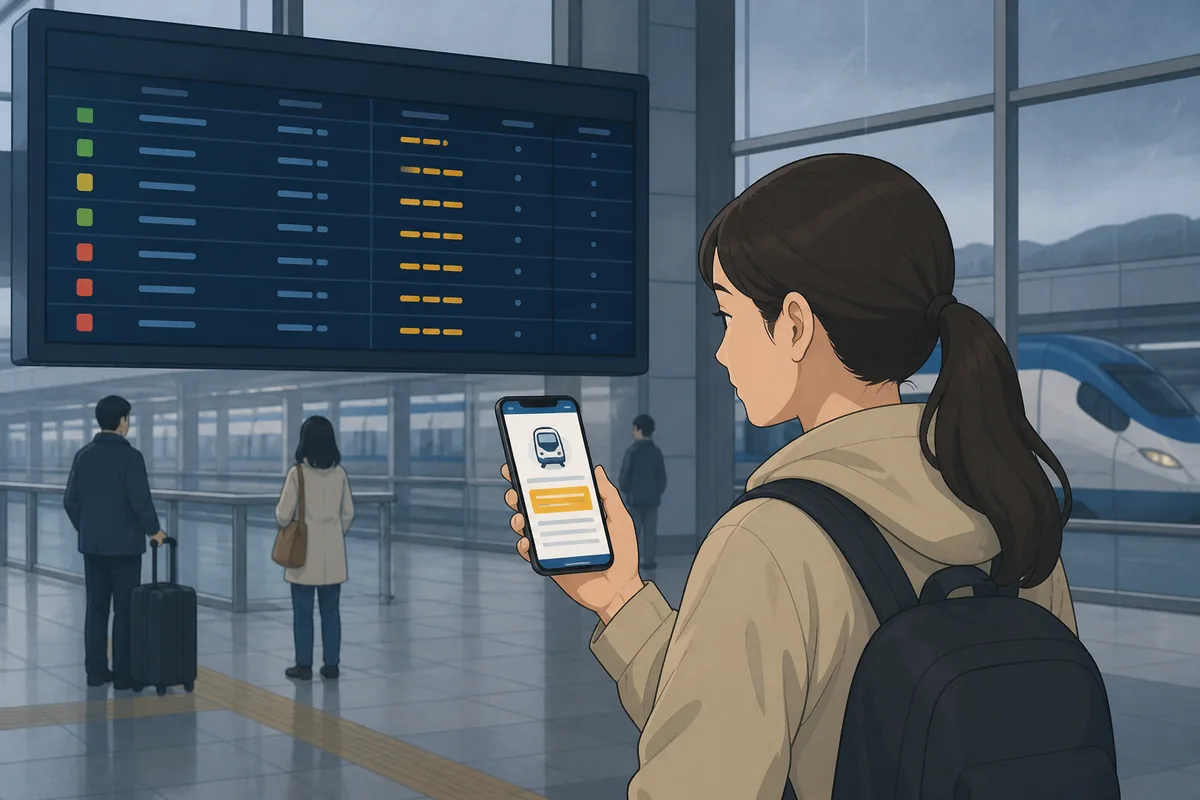
- Check KORAIL for your exact KTX train status before going to the station.
- Check the departure terminal or operator notice for intercity or express buses.
- Check the ferry company and port notice if your trip includes a boat.
- Look at the station or terminal departure board for live updates.
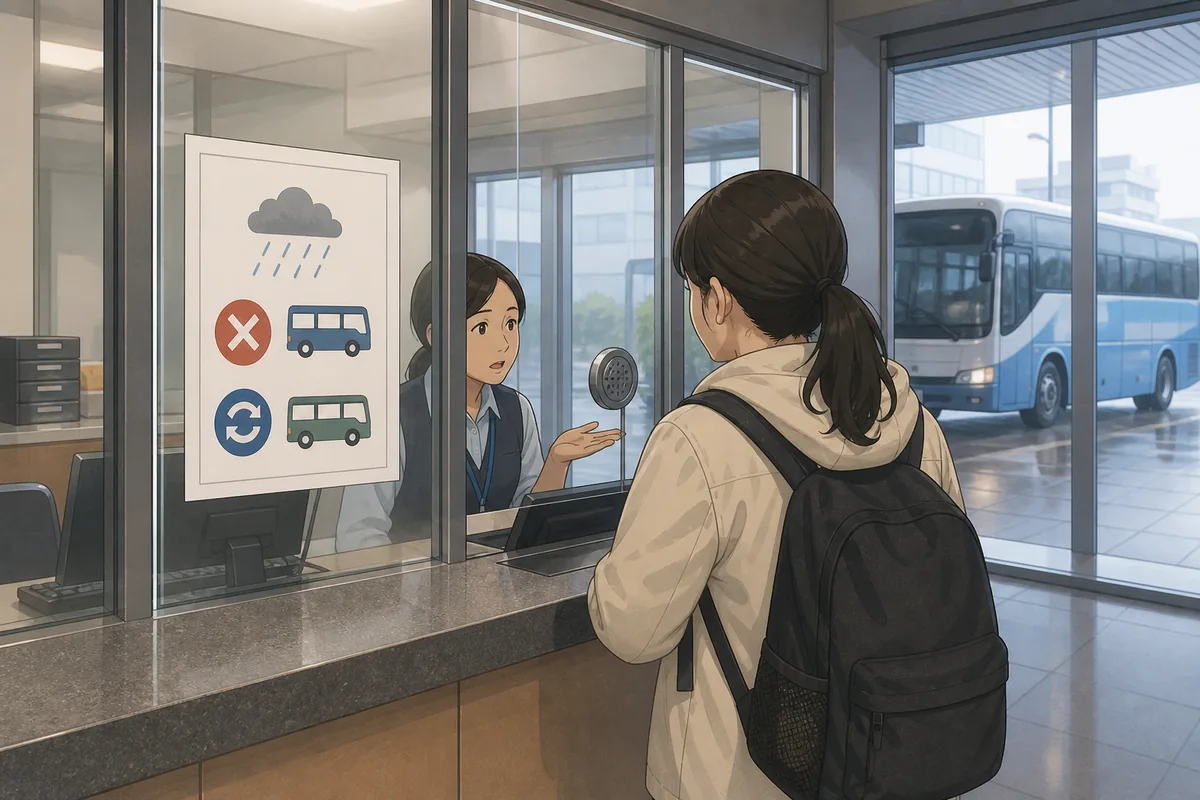
- If service is suspended, ask the ticket window about the next departure or refund process.
- Recheck close to departure, not just once in the morning.
When This Guide Helps
KTX buses ferries typhoon questions come up when a storm is approaching and a ticket is already booked. This guide helps if you are deciding whether to leave now, wait, or switch travel plans after checking official notices. Check Home – Korea Meteorological Administration for the current details.
It is also useful at a station or terminal when the board shows Korean status words and the next step is not obvious.
How KTX, Buses, and Ferries React to a Typhoon
KTX and trains
KTX often keeps running during heavy rain and wind, but KORAIL can delay, slow, or suspend specific lines when conditions become unsafe. The decision is route-by-route, not a blanket shutdown across the country. A train from one region can still operate while another line is suspended.
Regional lines and older rail sections are more likely to be affected than main high-speed corridors.
Intercity and express buses
Bus service is more sensitive to road conditions, especially on coastal roads, bridges, and mountain routes. Terminal managers or bus operators can suspend a departure or a whole route if the weather makes driving unsafe. There is no single national cancellation feed for every bus route, so the departure terminal is the key place to check.
Express buses and intercity buses use different booking and terminal systems, so make sure you are checking the correct one.
Ferries
Ferries are usually the first to be disrupted. Wind, waves, and port conditions can trigger cancellations before land transport is affected. Island routes such as Jeju or Ulleungdo are often the most vulnerable. A ferry may be cancelled even when the weather on land seems manageable.
Sea service can also stay suspended after the main storm passes if port conditions are still unsafe.
How to Check KTX, Buses, and Ferries During a Typhoon
For KTX
Use the KORAIL website or app, then confirm the departure board at the station. If the notice is unclear, ask at the ticket window. KTX schedules can change quickly, so check again shortly before boarding.
For intercity and express buses
Check the terminal notice, the operator page, or the bus booking site linked to your route. If you are already at the terminal, the staffed counter is the fastest reliable source. For same-day changes, the terminal usually matters more than a third-party app.
For ferries
Check both the ferry company notice and the port notice. For island routes, both sources matter because the operator may update service before the port posts the next change. If you bought the ticket through a booking platform, still verify with the operator itself.
Quick warning
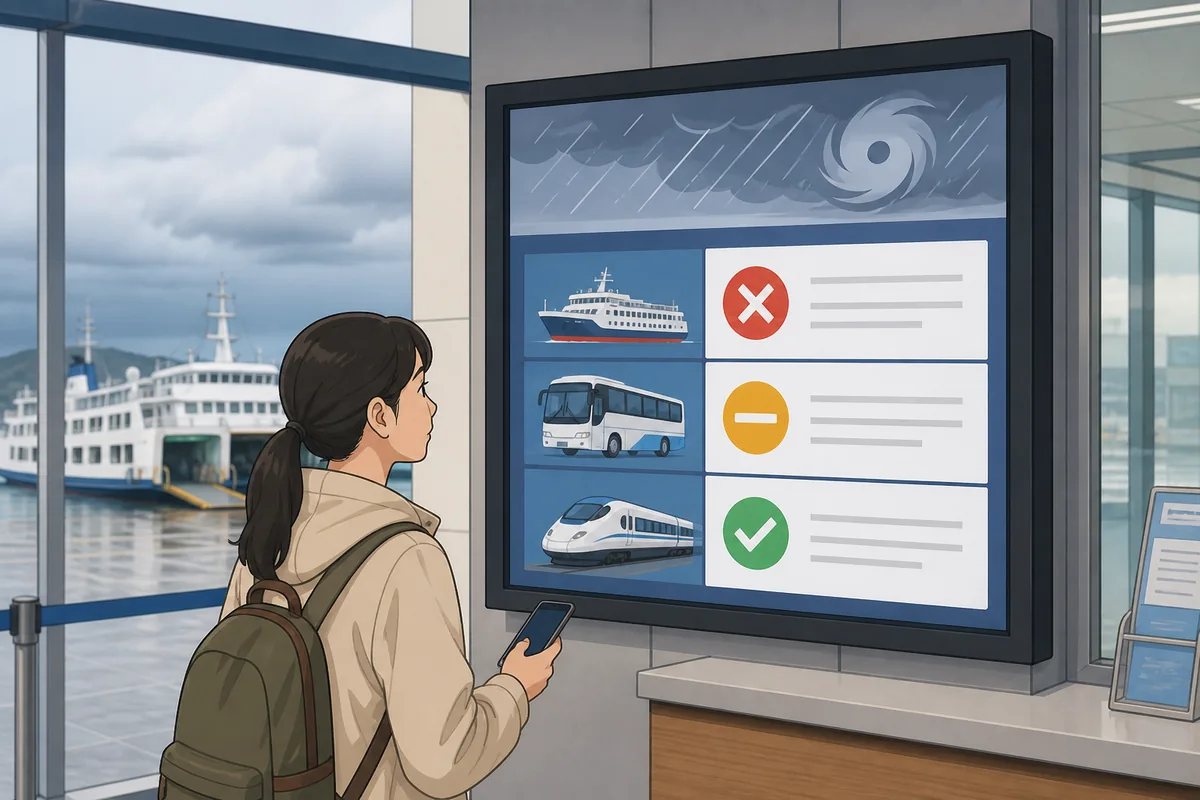
Do not assume a route is cancelled just because a typhoon is on the news. A named storm does not mean every KTX, bus, or ferry is stopped. The only reliable answer is the notice for your exact route.
Korean Phrases You Can Show
Useful Korean Signs or Words
Where to Get Help
For a station or terminal check, use the ticket window first. Staff can confirm whether your specific departure is running and tell you where to go next.
If you need English help, Korea’s 1330 travel helpline is useful for checking where to look and for simple translation at the counter.
For KTX, KORAIL is the official source. For buses, use the terminal or the operator linked to your route. For ferries, use the ferry company and port notices directly.
Common Mistakes
- Checking only once and then leaving anyway without rechecking near departure.
- Using a third-party booking app as the final source for cancellations.
- Assuming all transport in Korea is suspended at the same time.
- Forgetting that ferries are usually affected earlier than trains or buses.
- Going to the wrong bus system, especially when express and intercity terminals are separate.
- Buying a replacement ticket before asking the original operator about the current status.
The Short Version
KTX buses ferries typhoon disruptions are route-specific, not automatic. KTX may still run, buses may be delayed or suspended by terminal, and ferries are the most likely to stop first. Check the official notice for your exact route, read the departure board, and ask staff at the ticket window if you need the next step.
FAQ
Will KTX run during a typhoon in Korea?
Sometimes yes. KORAIL can keep some trains running while delaying or suspending others, depending on wind and route conditions. Check the official KORAIL notice for your train before departure.
Will intercity buses stop during bad weather in Korea?
Some routes keep running, while others are delayed or suspended first, especially on exposed roads. Check the correct terminal or operator notice for the exact route you booked.
Will ferries be cancelled in a typhoon in Korea?
Ferries are often cancelled earlier than trains or buses because sea conditions change fast. Always check the ferry company and port notice on the day of travel.
Where can I check official transport notices in Korea?
Use KORAIL for trains, the terminal or operator for buses, and the ferry company or port notice for ferries. Station and terminal departure boards also show live status.
Note: This guide is for travel navigation in Korea. It is not medical, legal, or emergency professional advice. For urgent situations, contact local emergency services, official staff, or your embassy/consulate as appropriate.
Sources & Verification
- Home – Korea Meteorological Administration — Korea Meteorological Administration
Last checked: August 7, 2026