Korean Supermarkets Explained: What You Need to Know
Korean supermarkets like Lotte Mart, Emart, and Homeplus are the easiest places to buy snacks, gifts, and ready-to-eat meals, while a local neighborhood store is better for a quick grab of basics. The big chains are similar enough that the best choice is usually the one closest to you, but you should still check for closed days, bring a bag, and know where the ready-food counter is.
What to Do First
- Go to a big chain if you want snacks, souvenirs, or a proper grocery run.
- Use a local store if you only need one or two items.
- Check the entrance for 휴무 (closed day) before you walk in.
- Bring a reusable bag or plan to buy one at checkout.
- Take a basket for a small basket-sized shop, or a cart for a full grocery trip.
- Look for 즉석식품 if you want ready-to-eat food.
- Use a staffed checkout lane if you want the easiest first visit.
When This Guide Helps
Korean supermarkets can feel simple once you know the basics, but the first visit is usually about figuring out which store to choose, whether it is open today, and how checkout works. This guide helps when you are standing in front of a Lotte Mart, Emart, Homeplus, or a small neighborhood store and want a fast answer without guessing.
It is also useful if you want packaged snacks, ready meals, or a convenient place to buy toiletries, drinks, and take-home food without needing to read every sign in Korean.
What to Do First
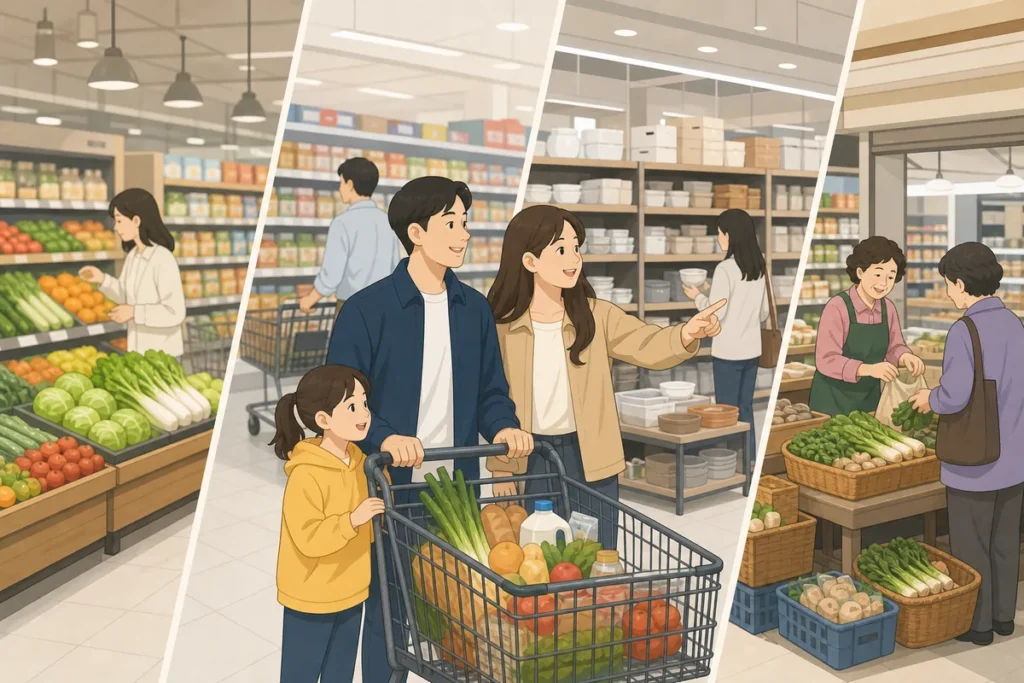
Start by deciding whether you need a big shop or a quick stop. Large Korean supermarkets are worth the walk when you want choice, bulk snacks, bakery items, and prepared food. Local stores are better for a short list and less walking.
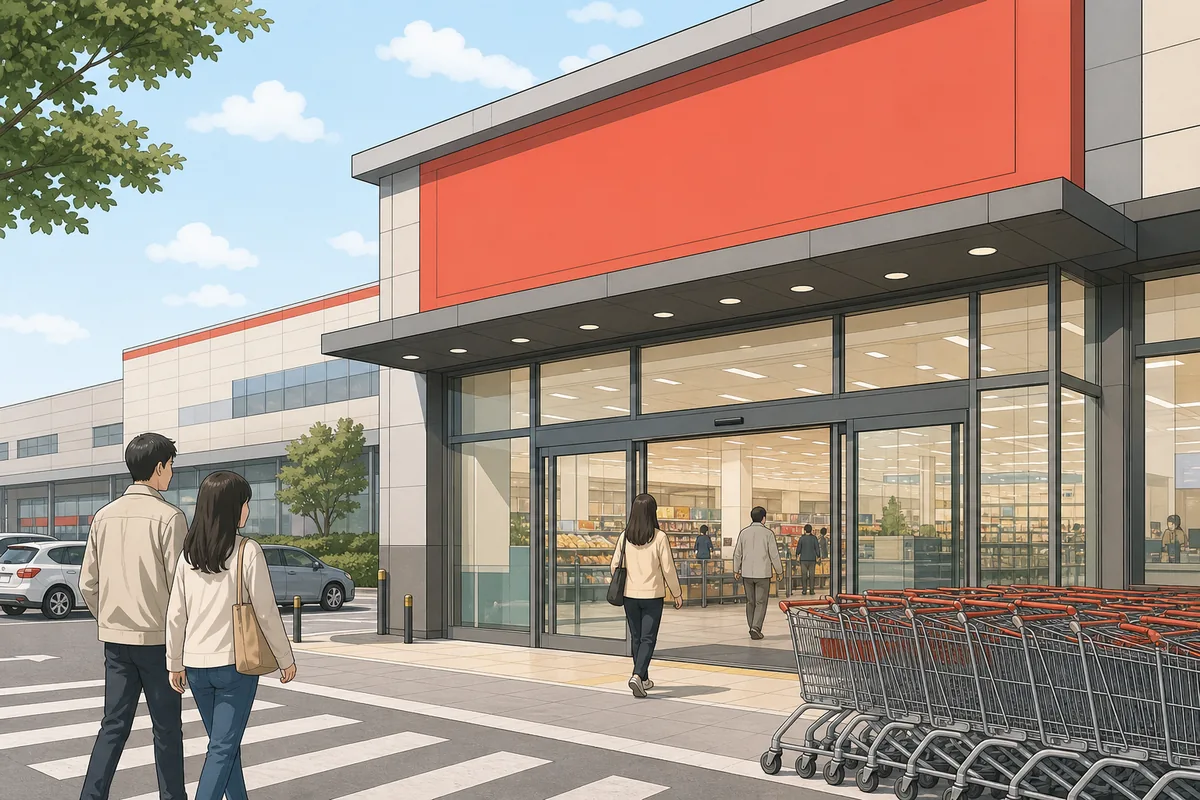
At the entrance, grab a basket for a small load or a cart if you are buying more than you can carry. In many stores, carts are lined up near the door, baskets are stacked beside them, and the checkout area is clearly marked with 계산.
When you reach checkout, staff usually scan the items and you bag them yourself at the end of the belt. That is normal. If you want ready food, walk toward the deli or hot-food area and look for 즉석식품.
Korean Phrases You Can Show
Useful Korean Signs or Words
Korean supermarkets: What Is Actually Different
Lotte Mart, Emart, and Homeplus are all large-format stores, so the shopping experience is broadly similar. Each one carries food, drinks, household items, snacks, and often some clothing or seasonal goods. For travelers, the most useful difference is usually location, not brand.
Lotte Mart is often convenient if you are already near a Lotte mall or hotel. Emart is the best-known general chain and is easy to find in many cities. Homeplus often feels a little calmer and is still a strong option for fresh groceries and everyday shopping.
If your goal is buying souvenirs to take home, all three work well. Look for seaweed, chips, boxed snacks, instant noodles, sweets, and other shelf-stable items that pack easily.
Local Neighborhood Supermarkets
A local neighborhood store is smaller, faster, and more practical for a quick stop. It is good for eggs, milk, fruit, noodles, tofu, and a few drinks, but it will not have the same selection as the major chains. If you only need one item, this is the easier choice.
These stores are not the same as convenience stores. A convenience store is better for drinks, snacks, and late-night basics, while a neighborhood supermarket is a real grocery store with a limited but useful selection.
Bags, Carts, and Checkout Flow
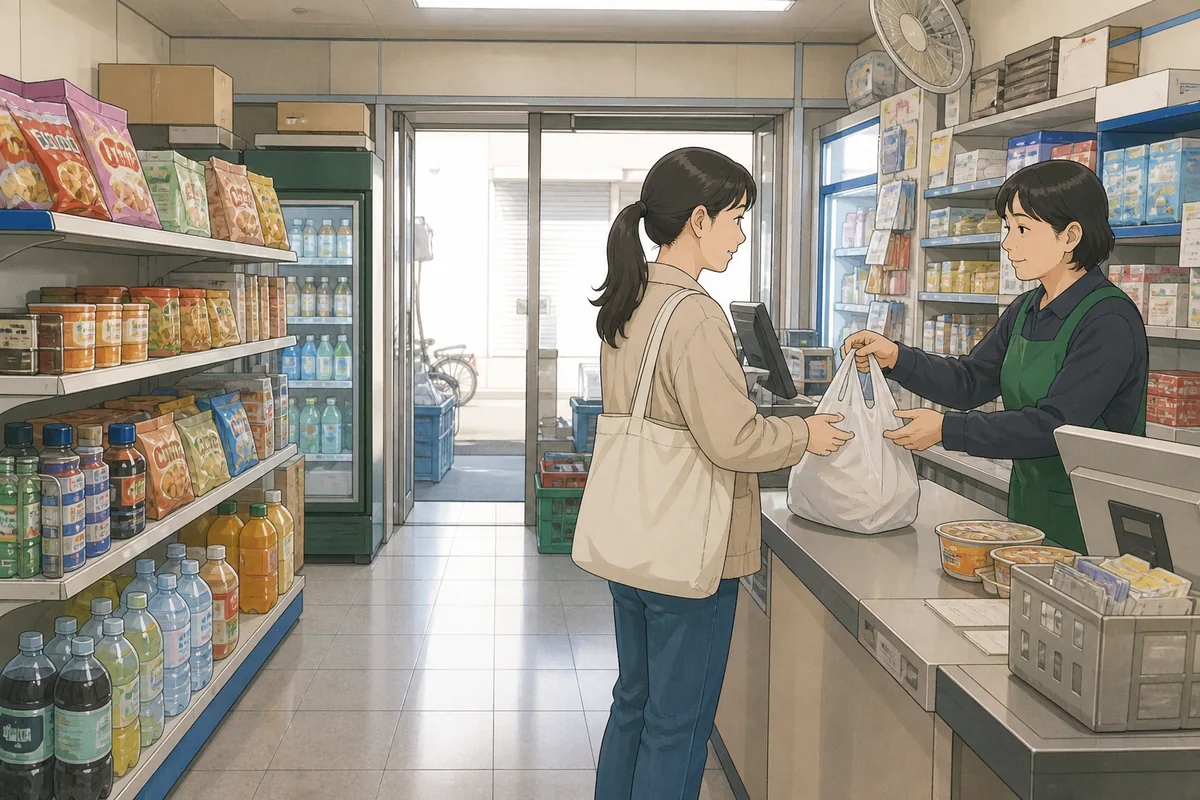
Bring your own reusable bag if you can. Large stores usually do not hand out free bags, and the cashier will expect you to pack your own items at the end of checkout. If you forget a bag, you can usually buy one near the register.
The flow is simple: choose your items, head to 계산, put everything on the belt, pay, and bag your own groceries. Staffed lanes are the easiest option if you are new to the store, while self-checkout is fine if you are comfortable with a screen.
If you are carrying only a few things, a basket is enough. If you are buying groceries for several days, take a cart and save yourself the trip back to the hotel carrying loose bags.
Ready-to-Eat Food: What to Expect
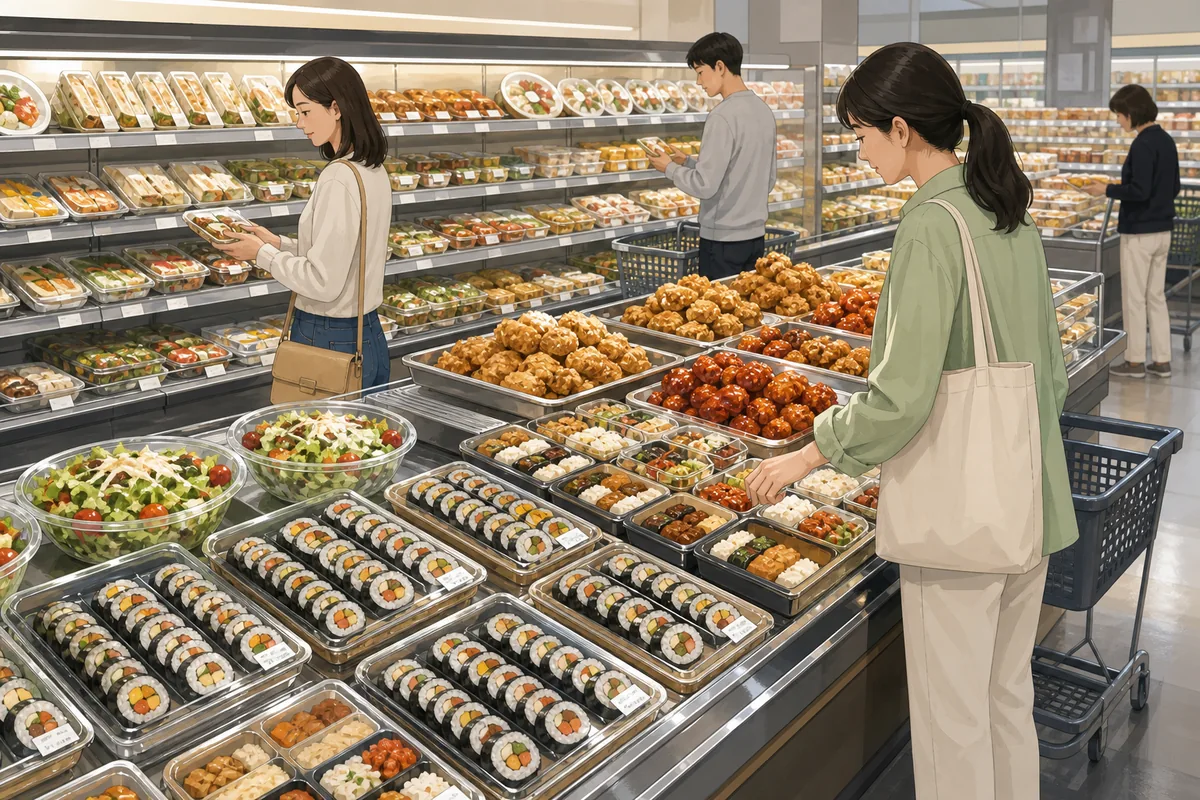
The ready-food counter is one of the most useful parts of Korean supermarkets for travelers. Look for kimbap, fried chicken pieces, lunch boxes, salads, bakery items, and hot side dishes. Some stores also have a small seating corner nearby, which makes it easy to eat before you leave.
For sealed takeout, look for 포장 on the package or ask staff to point you to packaged versions. This is handy when you want food for later instead of something hot right away.
Holiday Closures: The Sunday Rule
Large stores often close on a scheduled 휴무 day, and Sunday closures are the most common surprise for visitors. The exact schedule varies by branch and district, so the safest move is to check the notice at the entrance before you make a special trip.
If a big chain is closed, a local store or convenience store nearby is usually still open and can cover basic needs for the day.
Where to Get Help
Look for the customer service desk if you need help finding a product, paying, or understanding a section of the store. In many branches, the desk is near the entrance or exit and is clearly marked 고객센터.
If you cannot find what you need, pointing at the sign or showing a product photo is usually enough. Staff in major supermarkets are used to helping visitors, even when there is limited English.
Common Mistakes
- Going to a big store on its scheduled 휴무 day.
- Expecting free bags at checkout.
- Confusing a neighborhood supermarket with a convenience store.
- Skipping the 즉석식품 section and missing the easiest meal option.
- Using self-checkout when a staffed lane would be faster for your first visit.
- Assuming every branch has the same hours or layout.
Korean Supermarkets Explained becomes easier to handle when you recognize the situation and follow the practical steps above.
Korean Supermarkets Explained becomes easier to handle when you recognize the situation and follow the practical steps above.
For official information, check Visit Korea official travel information.
FAQ
What is the difference between Lotte Mart, Emart, and Homeplus in Korea?
They are all large supermarket chains with very similar layouts and product ranges. The main differences are branch location, store size, and how convenient each one is from your hotel or subway stop.
Can tourists buy ready-to-eat food in this topic?
Yes. Big supermarkets usually sell kimbap, fried food, lunch boxes, bakery items, and other ready-to-eat options that are easy for travelers to buy without speaking much Korean.
Do this topic give bags at checkout?
Usually no. Bring a reusable bag or buy one at the register. At large stores, packing your own items after payment is normal.
Are this topic closed on Sundays?
Some large supermarkets close on scheduled Sunday days, but the exact date varies by branch and district. Always check the 휴무 notice at the entrance before making a long trip.
Is a local supermarket the same as a convenience store?
No. A local supermarket is a small grocery store with fresh and packaged food, while a convenience store is smaller and better for quick snacks, drinks, and basics.
Note: This guide is for travel navigation in Korea. It is not medical, legal, or emergency professional advice. For urgent situations, contact local emergency services, official staff, or your embassy/consulate as appropriate.