Wrong Subway Or Bus: What You Need to Know
If you took the wrong subway or bus in Korea, get off at the next safe stop, confirm the correct direction, and board again as soon as you can. In many cases the extra fare is small or avoidable if you correct the mistake quickly, but the final cost depends on the city, distance traveled, and whether you used a transit card.
Mistakes to Avoid First
- Do not keep riding and hope it will “loop back.”
- Do not ignore the direction display on the subway platform or bus front sign.
- Do not assume the opposite bus stop uses the same side of the street.
- Do not tap out and re-enter unless you really need to leave the fare zone.
- Do not wait too long to fix the mistake if you want to reduce extra fare risk.
- Do not rely on memory alone; check your map app right away.
- Do not panic — this is a normal transit mistake and usually easy to correct.
What to Do Immediately After Realizing You Took the Wrong Ride
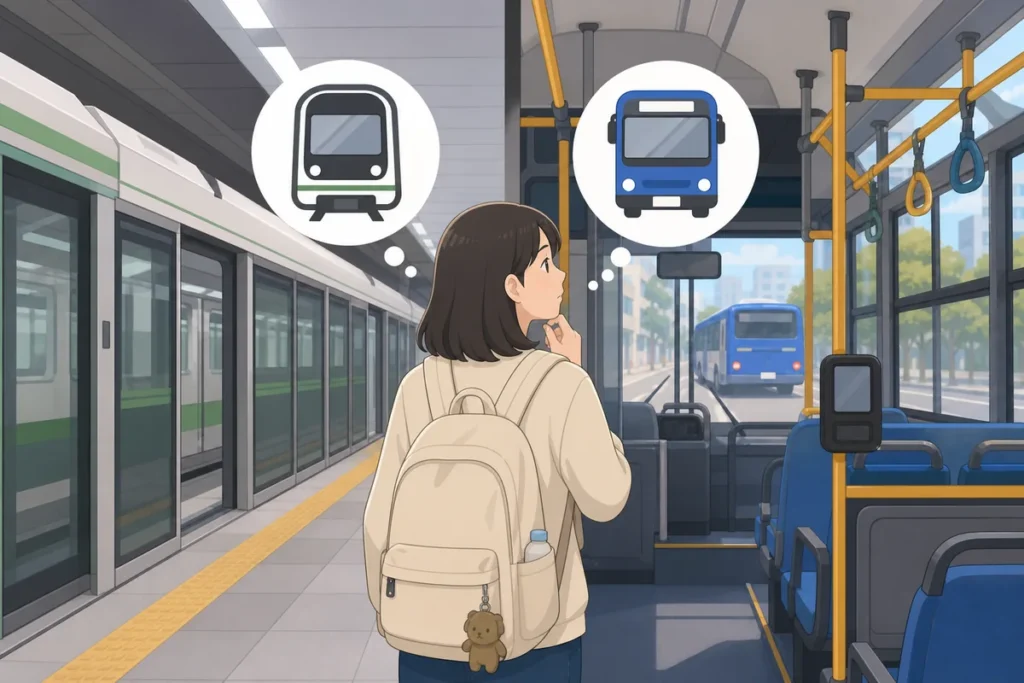
If you took the wrong subway or bus, the first move is simple: get off at the next safe stop and check where you are before doing anything else. The longer you stay on the wrong ride, the harder it is to correct your route and the more likely you are to face an extra fare.
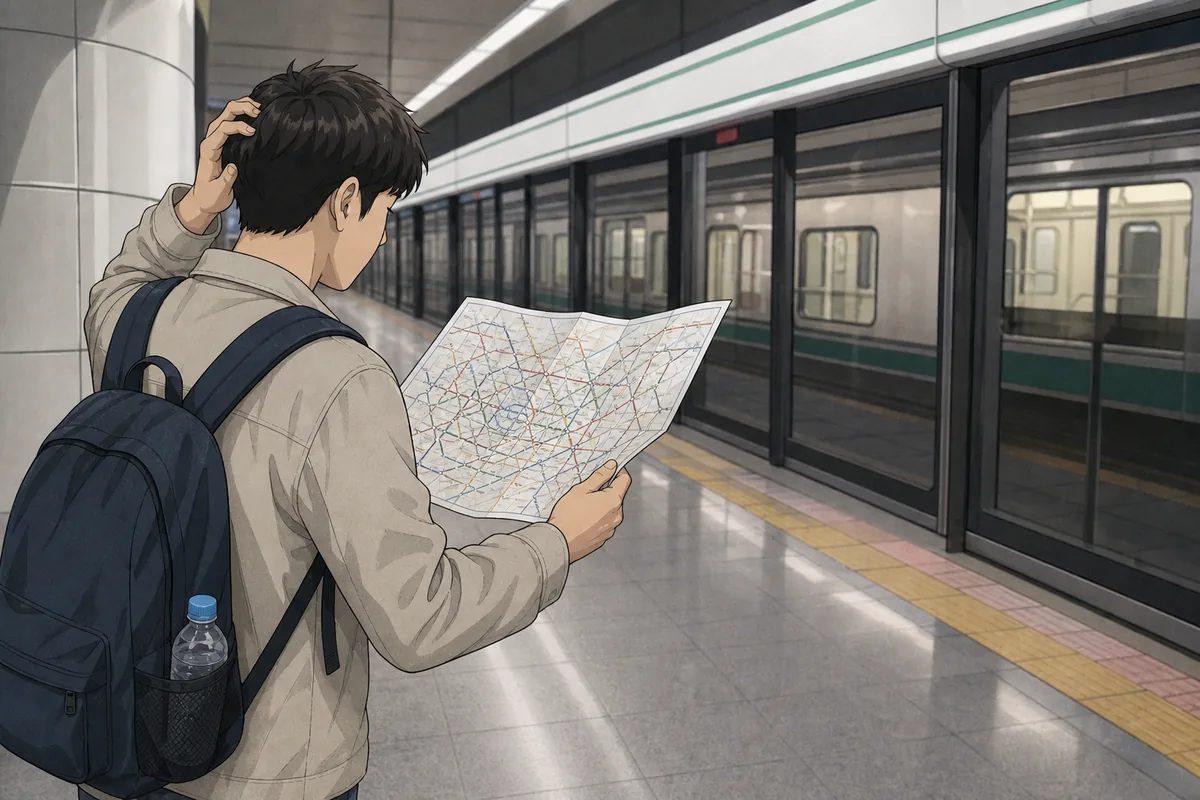
Open Naver Map or Kakao Map and search your destination. The app can show the corrected route from your current location, including the right station, stop, or transfer point. If you are unsure, show the destination to a station staff member or bus driver and ask for help.
In most cases, you do not need to overthink it. Stop, confirm, and re-board in the correct direction as soon as possible.
If You Took the Wrong Subway: Get Off, Reverse Direction, Re-enter
Step 1 — Get off at the next station
When you realize the subway is going the wrong way, get off at the next station and look for the direction signs. On Korean subways, the platform signs usually show the terminal station at each end of the line, which makes it easier to find the opposite direction.
Step 2 — Find the correct side
Some stations let you switch directions inside the paid area, while others require you to leave and re-enter. If there is a cross-platform transfer or an internal corridor, you can usually move to the opposite platform without paying again. If the station layout is separated, follow the signs and check whether you can stay within the fare gates.
Step 3 — Re-board in the correct direction
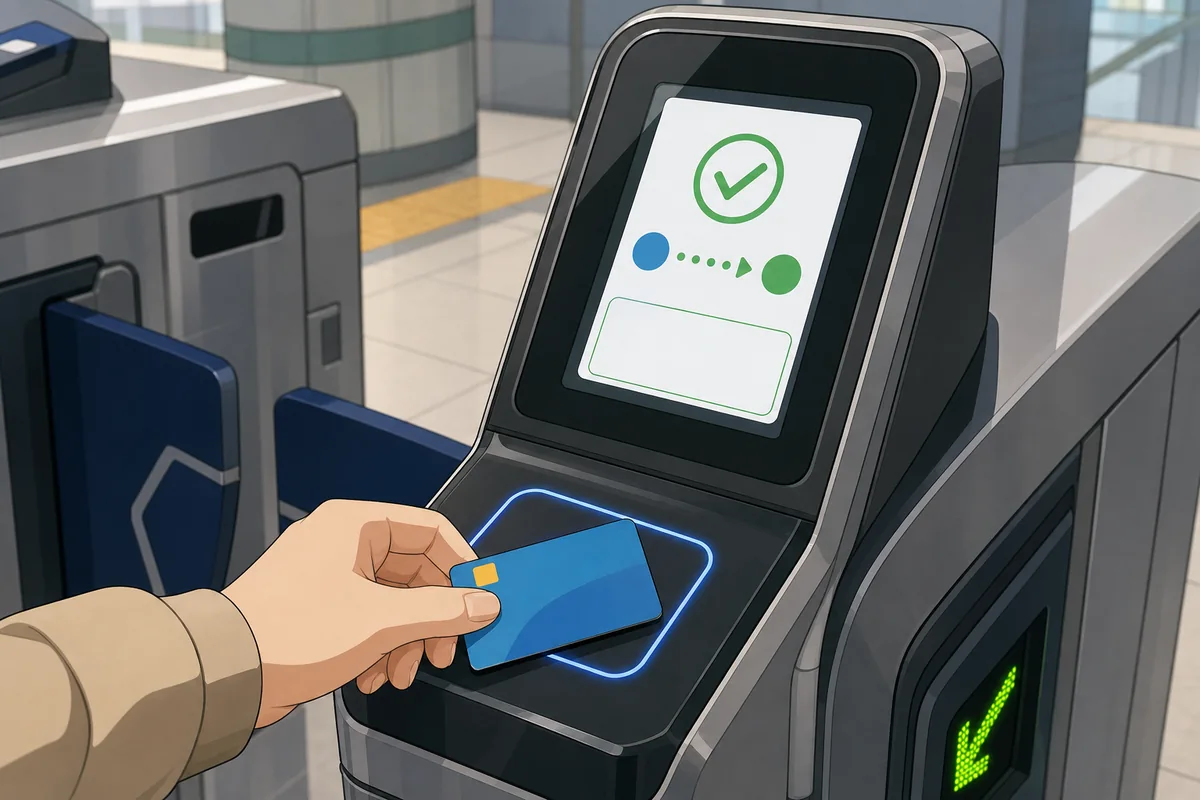
Once you are on the correct platform, board the next train going the right way. If you stayed inside the fare zone, the system usually treats the trip as one continuous journey. If you had to exit and tap in again, expect a new entry fare.
When the subway correction may cost more
If you must leave the station to reach the opposite platform, you will likely pay a new base fare when you re-enter. If you can reverse direction without leaving the paid zone, the fare impact is often smaller. Policies can vary by city and station layout, so check the station map or official transit guidance if you are unsure.
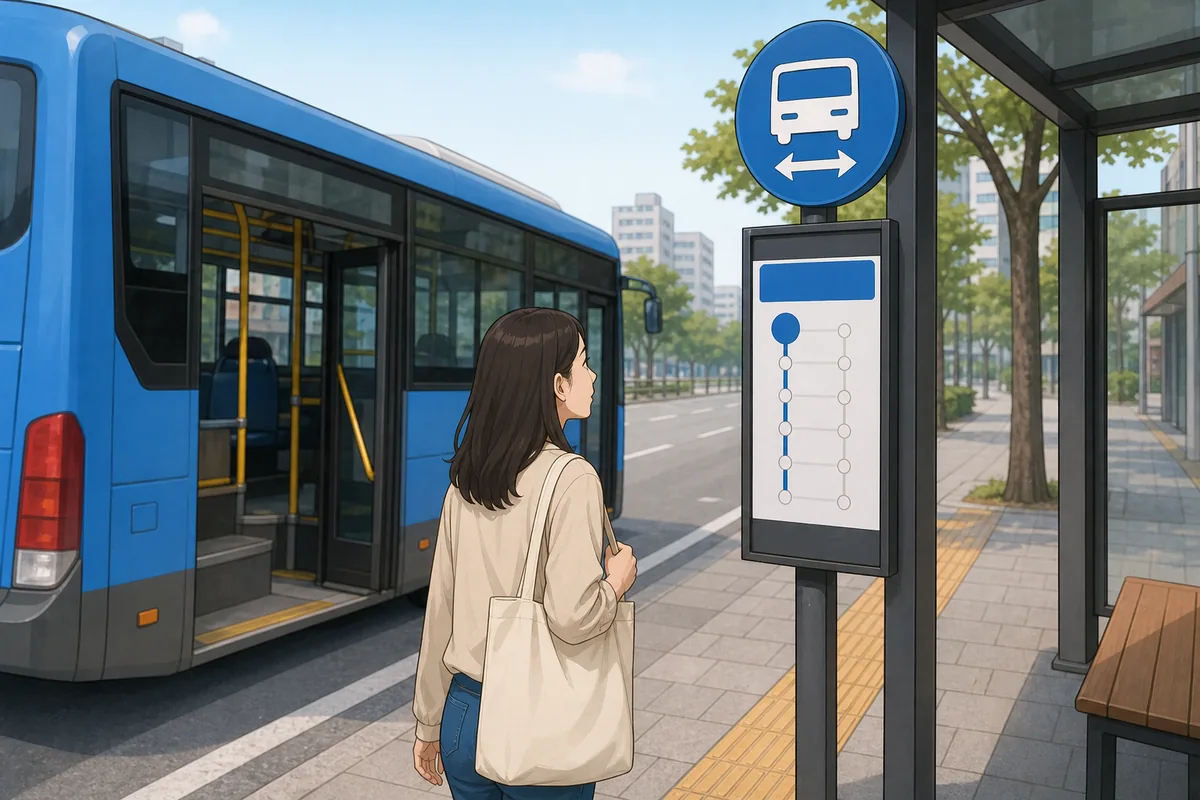
If You Took the Wrong Bus: Stop, Confirm Route Number, Board Again
Check the route display
Buses in Korea are identified by route number, color, and direction. If you boarded the wrong bus, or the right number in the wrong direction, press the stop button and get off at the next stop. Do not wait until the route becomes far off-target.
Find the opposite stop
In many places, the return bus stop is on the other side of the road. Check the bus stop sign for the route number and confirm the bus front display before boarding. If you are not sure which stop to use, your map app will usually show the correct side and route.
If you are already far away from your destination
If the bus route has taken you far off course, the fastest correction may be to get off near a subway station or major transfer point and switch to another route. Large interchanges often make it easier to recover your trip without waiting too long for the exact same bus.
Ask the driver briefly
You can ask the bus driver for help, but keep the question short and ask when the bus is stopped. Showing your destination on your phone is usually easier than trying to explain it in words. Drivers are busy and may only be able to point you in the right direction.
How Fare and Transfer Rules Affect Extra Charges
Your extra cost depends on whether you used a transit card, how quickly you corrected the mistake, and whether you had to exit and re-enter the system. The rules are not identical in every city, so treat any fare estimate as a guideline, not a guarantee.
| Situation | Likely fare impact |
|---|---|
| Subway: reverse direction inside the paid zone | Usually no new base fare; total distance may still matter |
| Subway: exit and re-enter the station | Usually a new base fare is charged |
| Bus: board the correct return bus quickly with a transit card | May count as a transfer or result in a small added amount |
| Bus: wait too long before boarding again | More likely to trigger a new fare |
| Bus: paid cash | Usually no transfer benefit on the return ride |
The main idea is simple: a transit card gives you the best chance of keeping the extra cost low. Cash riders are more likely to pay again in full. Because transfer windows and fare rules can change, confirm current details with the official transit operator for the city you are in.
Useful Korean Phrases to Ask for Help
Phrases for Getting Back on Track
When to Use a Station Staff Member or Driver for Assistance
Station staff are the best backup if you need help with a subway fare question, a platform layout, or the nearest correct exit. At larger stations, you may also find tourist information desks that can help with basic direction questions. Show your destination on your phone and keep the question simple.
For buses, the driver is your main source of help, but only ask while the vehicle is stopped. If the driver cannot clearly help, get off at the next stop and use your map app to recover the route. For a bus mistake, speed matters more than trying to solve everything on board.
In both cases, the goal is the same: identify the correct direction quickly and avoid paying more than necessary.
Key Takeaways
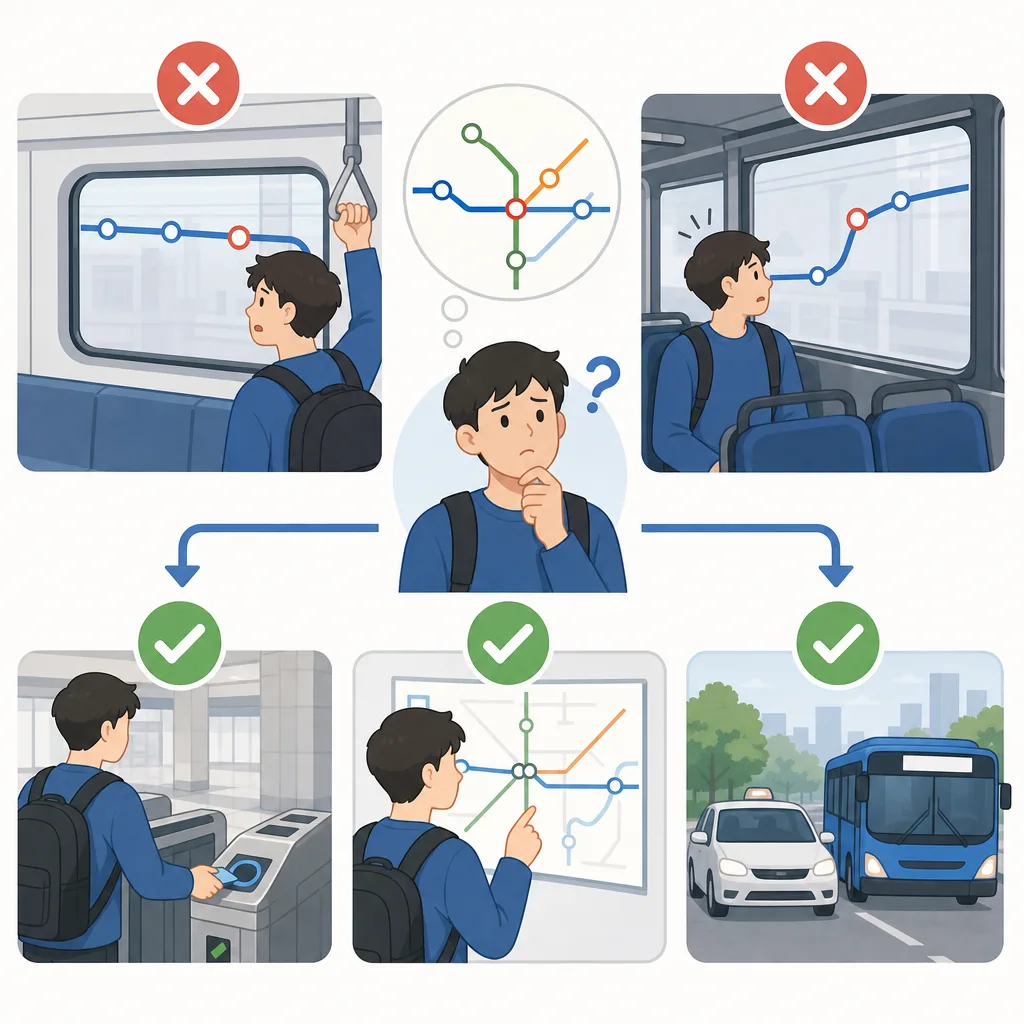
- If you took the wrong subway or bus, get off at the next safe stop and correct the route immediately.
- On the subway, try to switch directions inside the paid area to reduce the chance of a new base fare.
- On the bus, confirm the route number and the opposite stop before boarding again.
- A transit card usually gives you more flexibility than cash when fixing a mistake.
- Use a map app right away so you can recover the route without guessing.
- Station staff and bus drivers can help, but keep the question short and specific.
- Fare and transfer rules can change, so confirm current details with official transit sources when needed.
Note: This guide is for travel navigation in Korea. It is not medical, legal, or emergency professional advice. For urgent situations, contact local emergency services, official staff, or your embassy/consulate as appropriate.